Újhon: a medieval village that remembers
I’ve been building a game called Újhon. It’s Hungarian for “a new home” (say it OO-y-hon), and it’s a medieval village builder about the people who live there.
Your households arrive in a clearing in the wildwood with a tent, a fire and a winter coming.
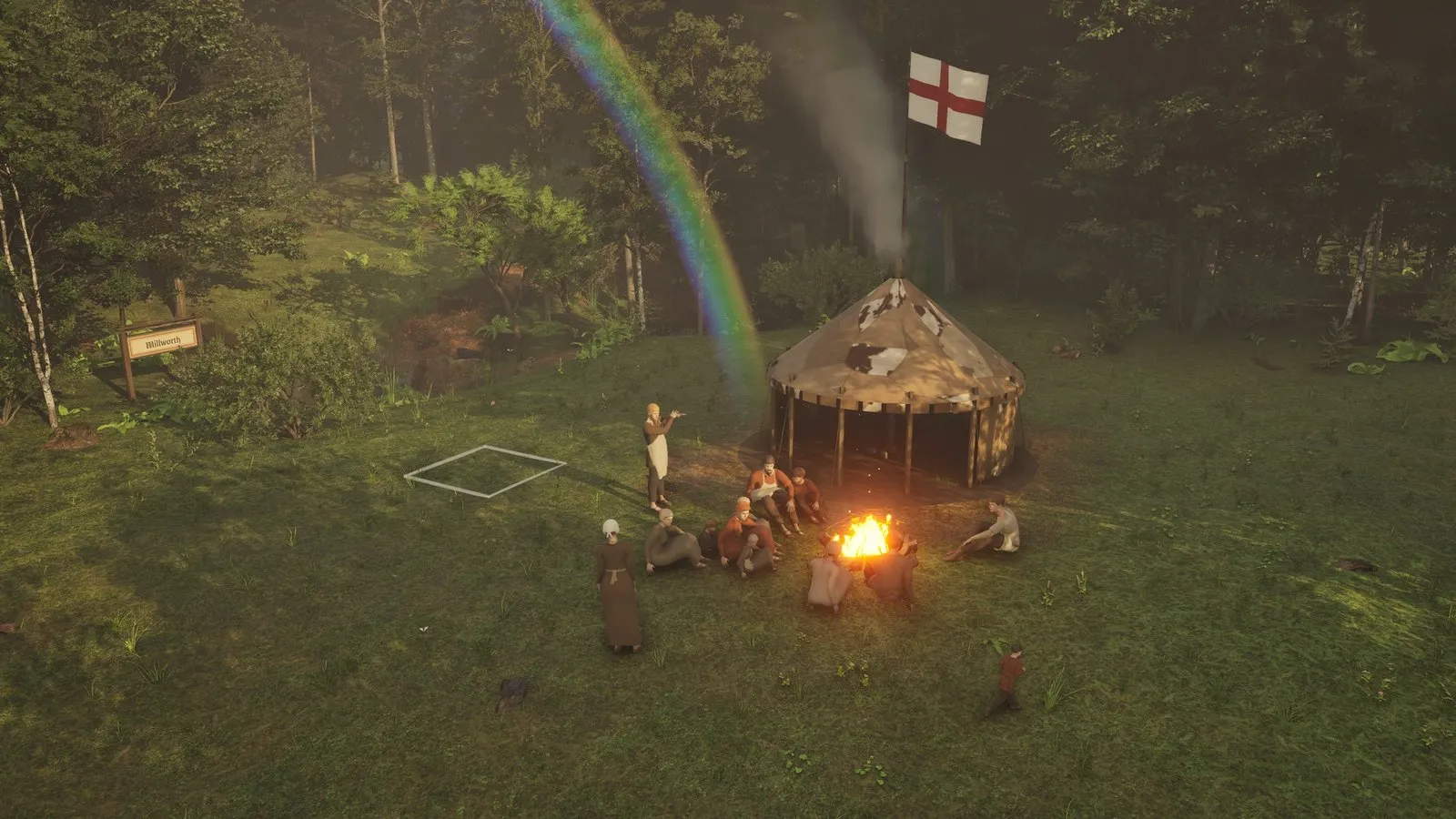
Every one of them has a name, a family and a trade. They fell the trees, haul every log and sack on their own backs, raise the houses you mark out, farm, fish, bake and brew, marry and grow old. Nothing appears out of thin air: every log and every sack is carried by someone.
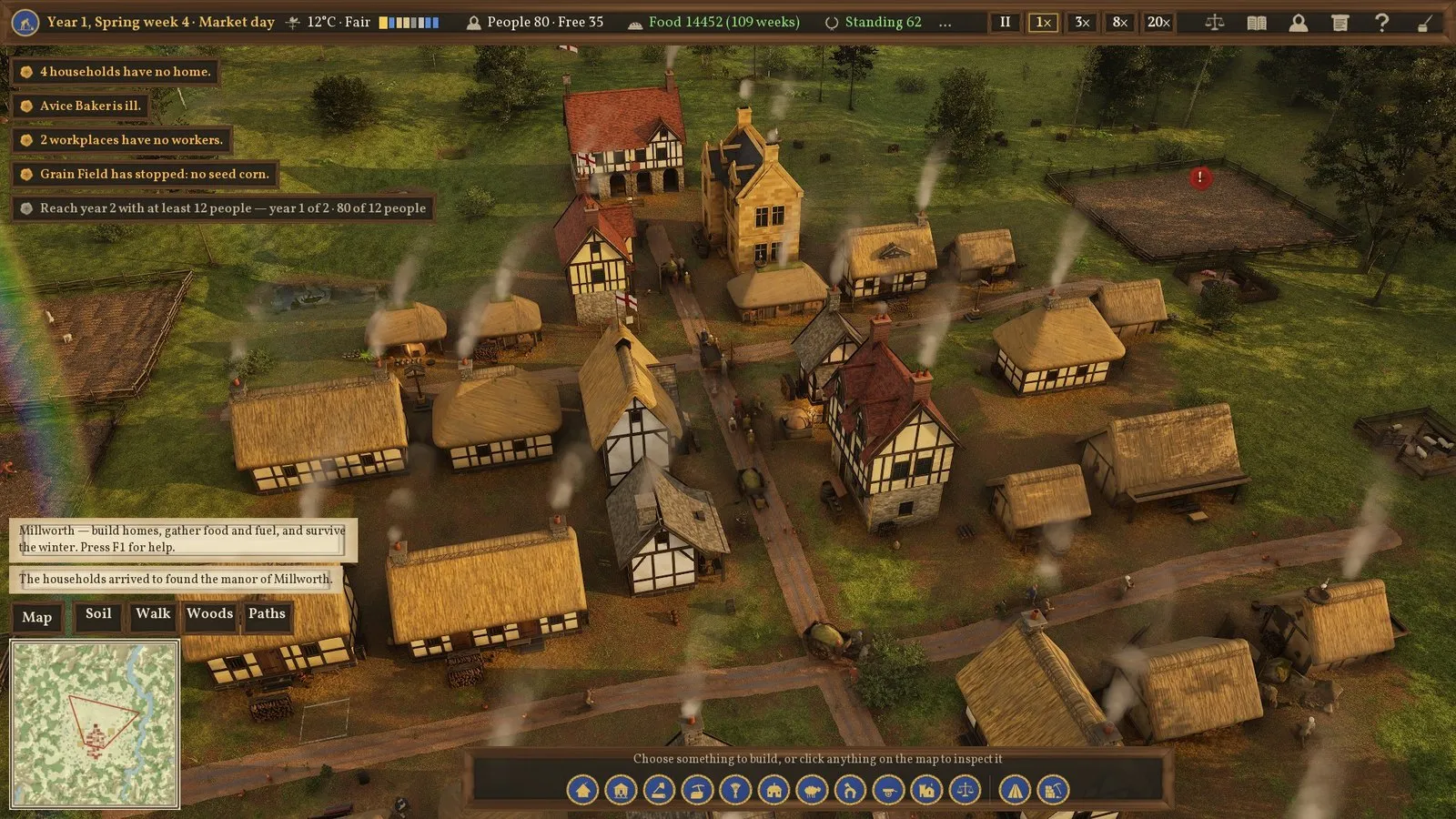
A village that grows like one
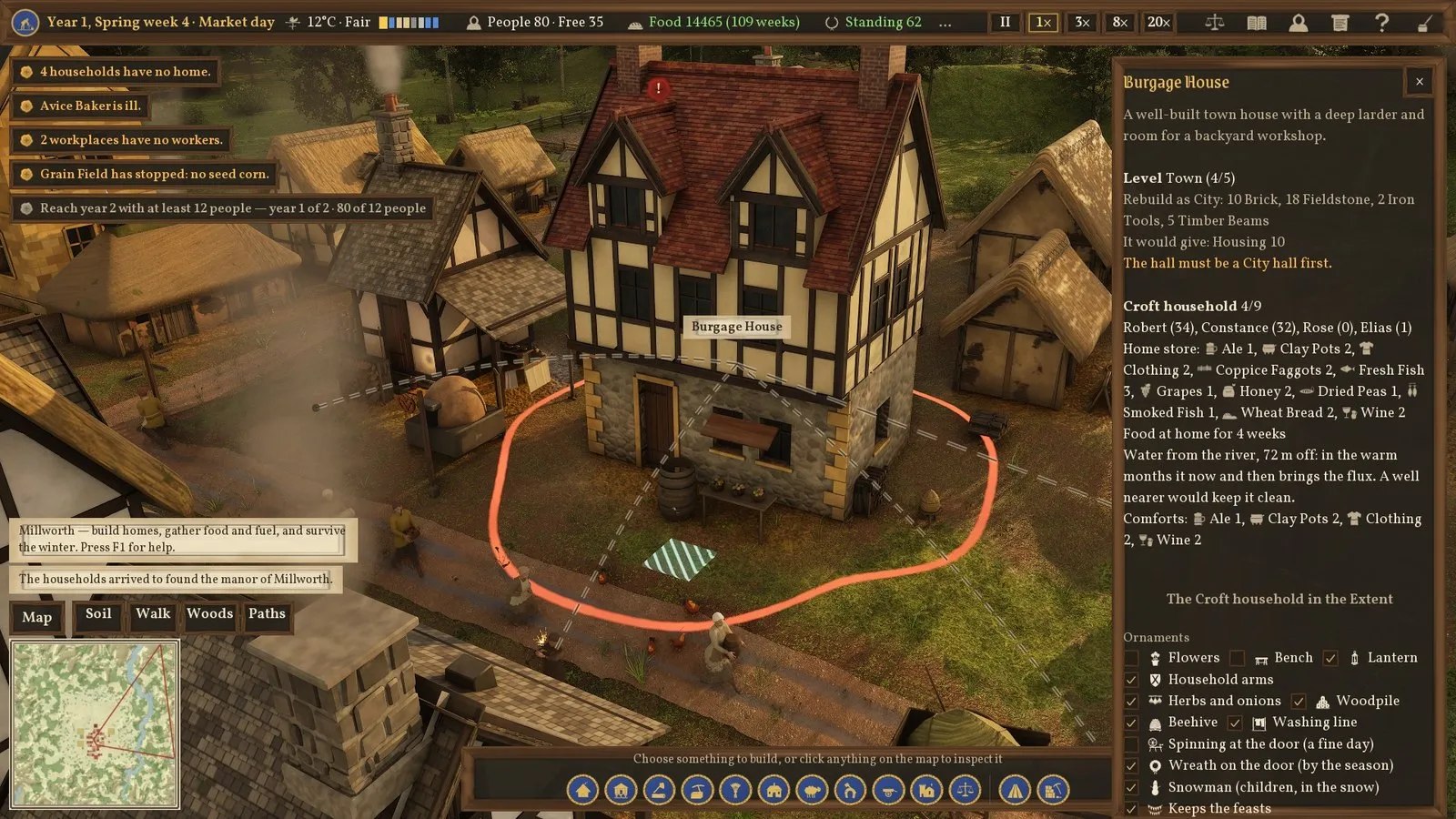
What I wanted most was villages that look like real ones, not like a grid. In Újhon you can put a building anywhere, at any angle. It turns to face the road beside it and puts its door on it. Streets bend, lanes meet at odd corners, and the ground people walk most becomes a trodden way that the next house stands beside.
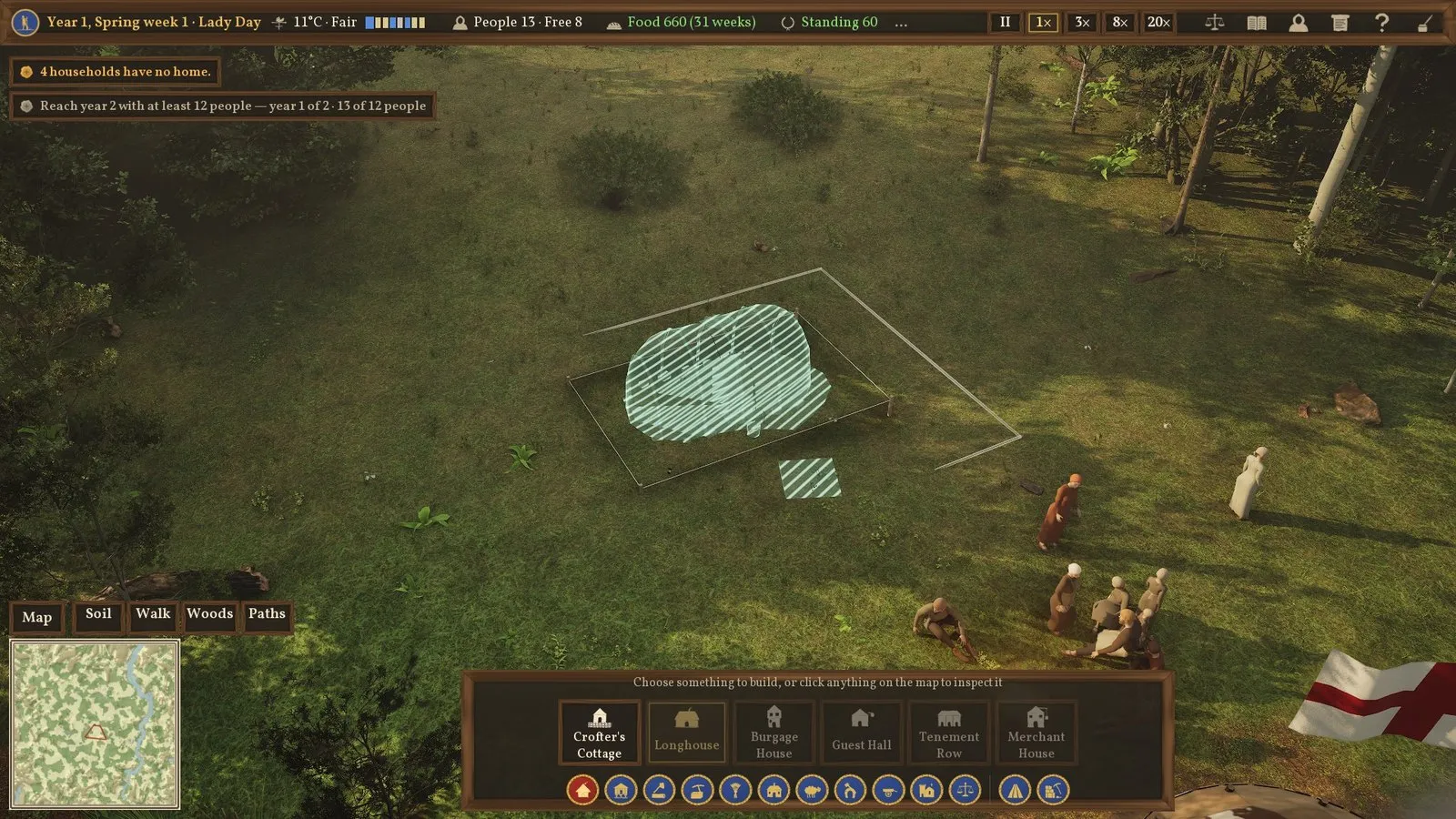
Doors, gates and fences matter. Every errand ends at a door or a gate, finished houses are solid, and fields are fenced with one way in, so where you build decides how far everyone walks. Fields and kitchen gardens you draw yourself, and the fence is priced by its length.
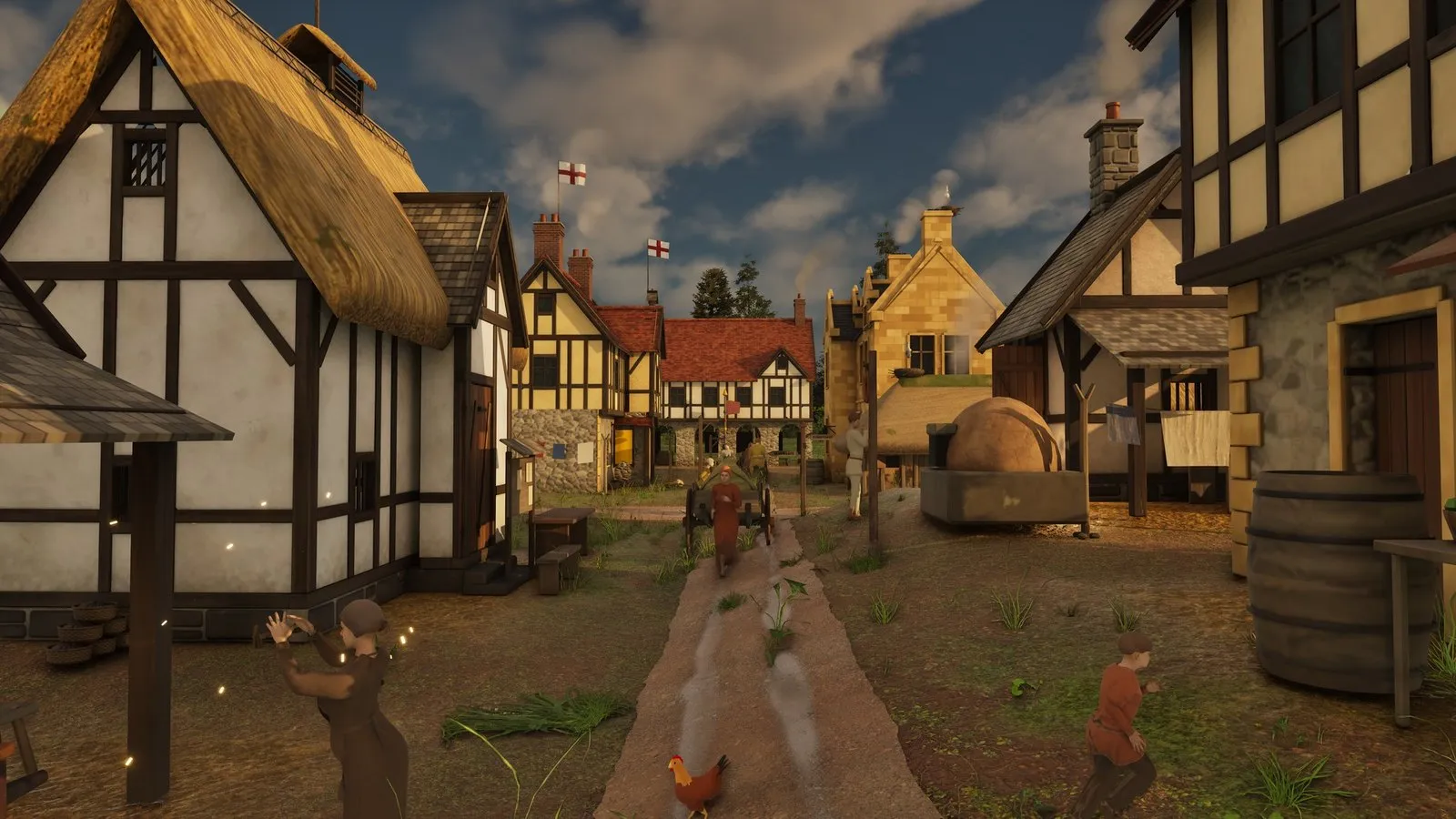
There are more than sixty kinds of building, and each one is rebuilt through up to five levels as the manor prospers, from a hide shelter to a timber-framed house to a stone hall. That’s 285 models, every one of them modelled in code in Blender. Houses also get variants, so a row is never one house repeated.
To get the plots right I went back to surveyed medieval plans (Stratford, Alnwick, Alresford, the Scottish burghs, Wharram Percy) and measured the game’s villages against them. A house’s yard is furnished by its household: a water barrel by the back door, a rick in winter, a burgess’s crates and barrels.
The year turns
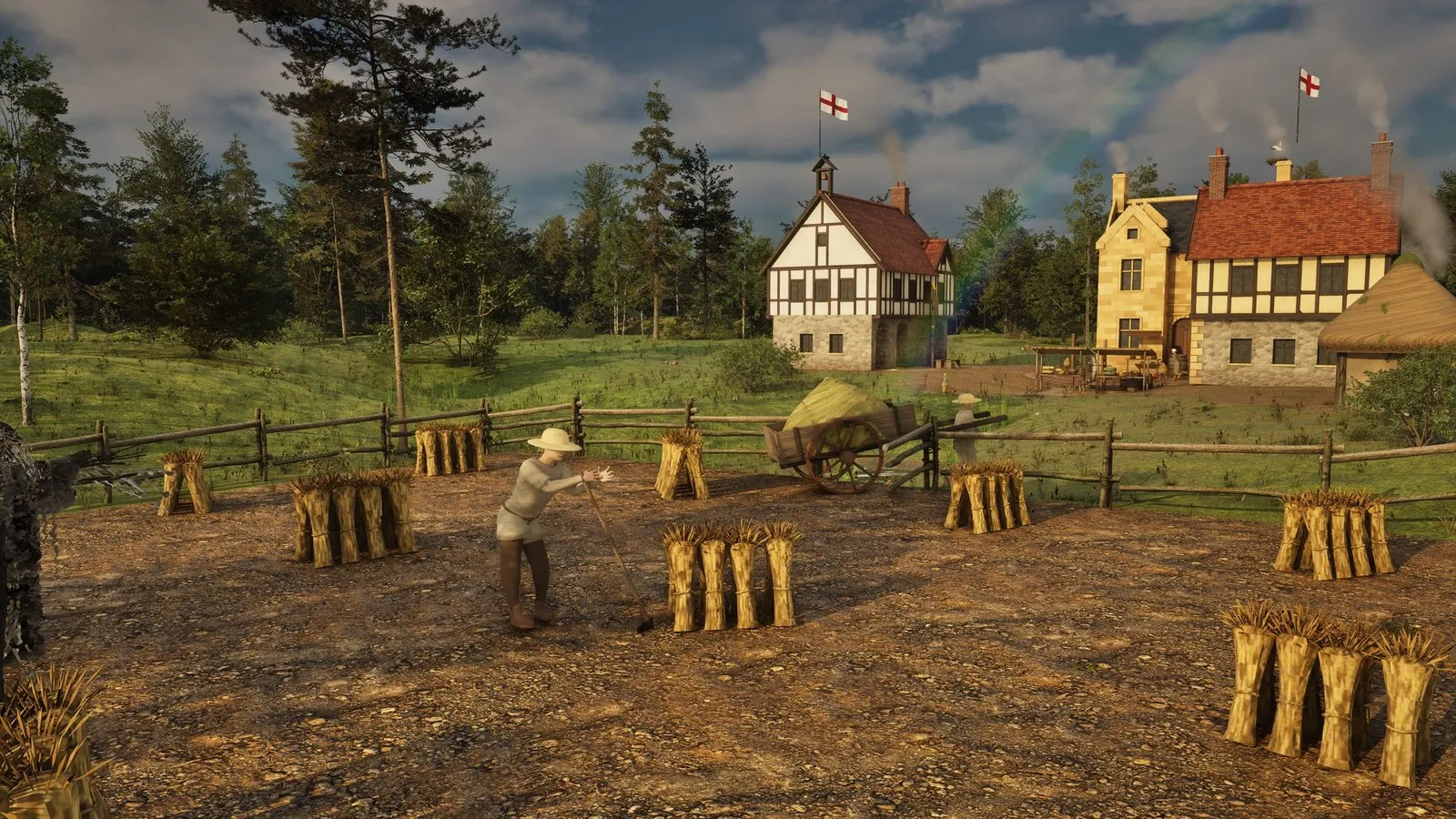
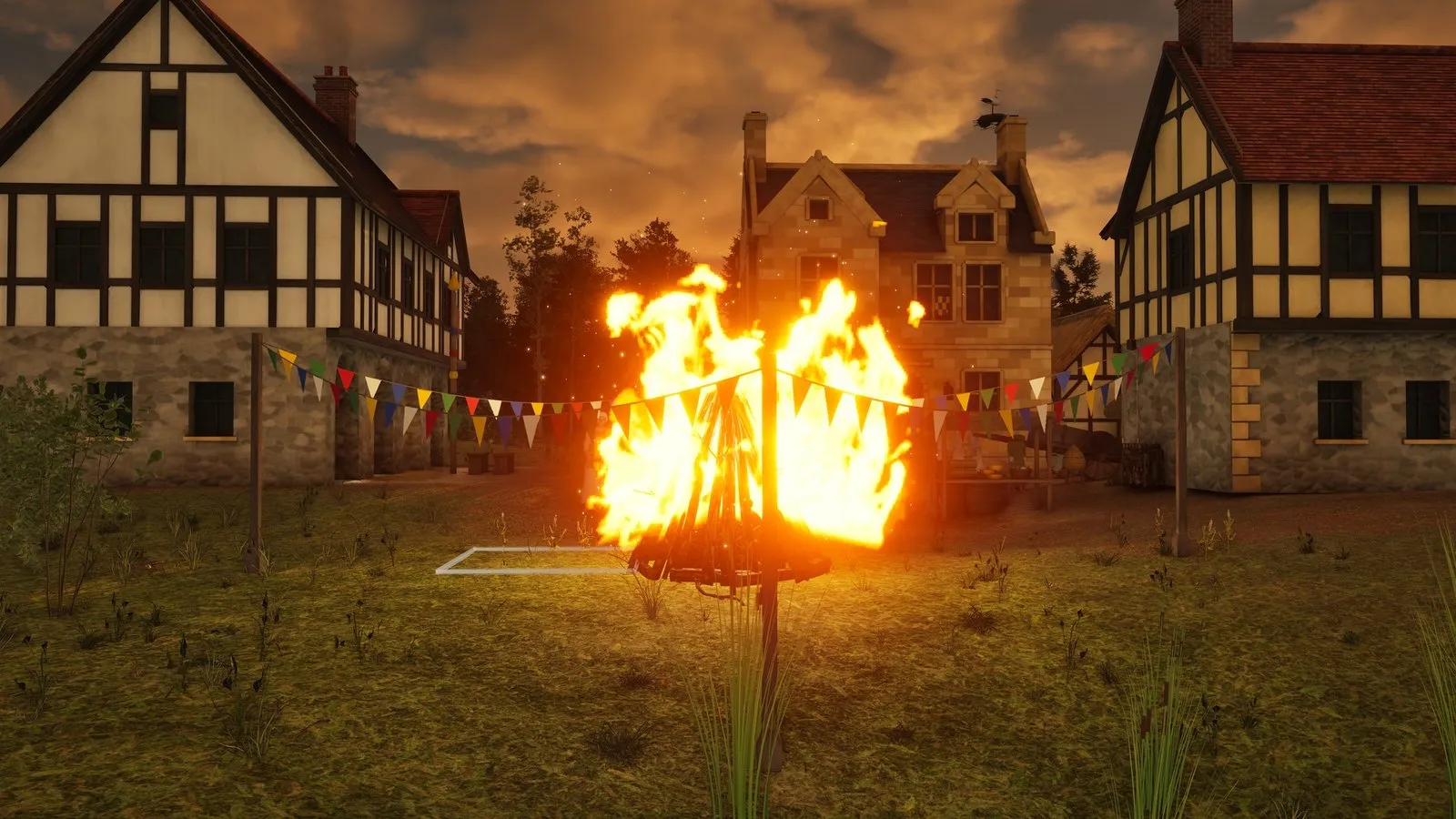
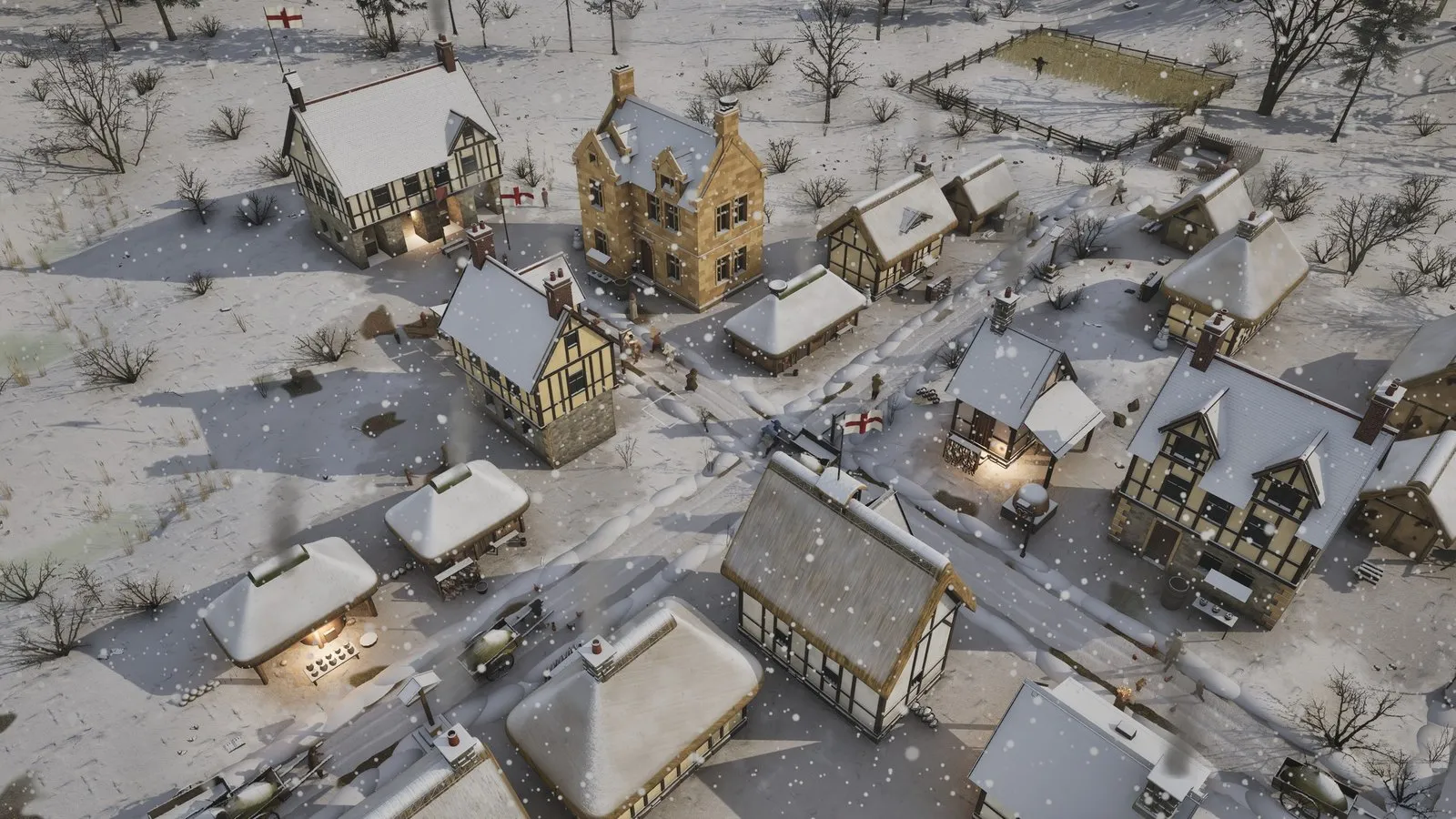
The calendar is the medieval one. You bring in the harvest before the weather turns, put wood by for the winter, and keep fifteen feasts through the year: a maypole on May Day, bonfires at Midsummer, carved turnips on All Hallows’ Eve, holly and candles at Christmastide.
Under the hood
Újhon started as a game I built in Godot, called Feudal. This version runs on Unreal Engine 5. The simulation is a C++ port of the Godot one, engine-independent C++20, and it reproduces the original bit for bit: the random numbers, the hashing, the sorting, the pathfinding, the noise. I checked it by replaying 100 weeks in both and getting the same state hash. Since then it has changed on purpose (buildings off the grid, doors, walls that stop people), but old saves still load.
The whole thing is deterministic, so every machine agrees and a save reads back exactly. That is also what makes it testable: thousands of automated checks run on every change, and I stand up whole towns of a thousand people and play them for years to find what breaks.
Much of the code and some of the art were made with the help of AI tools, Claude among them. The game itself generates nothing with AI while it runs.
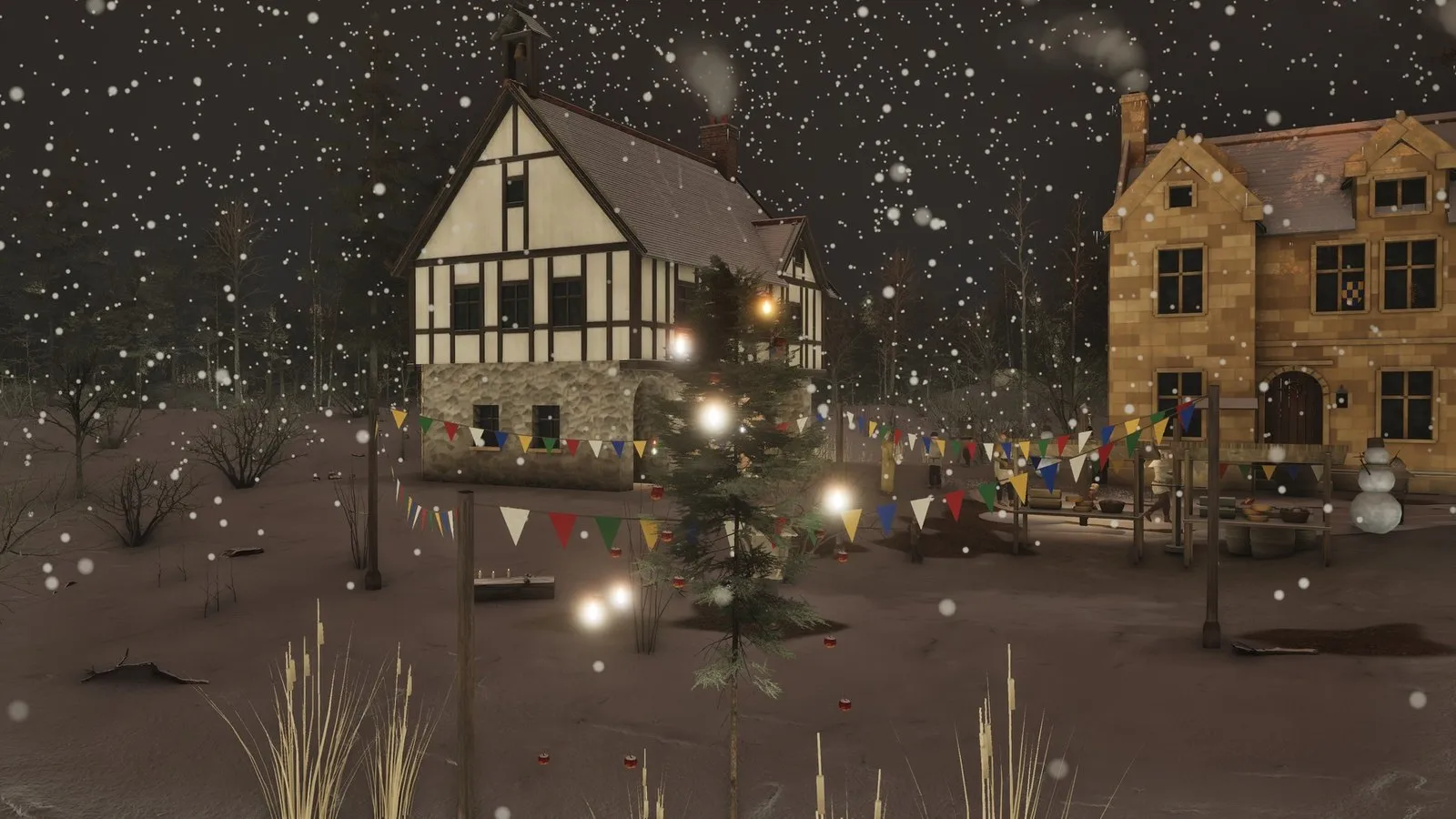
Újhon is heading to Steam as Early Access in 2027, on Windows first and macOS later. I’ll post the store page here when it’s up.
// comments